
倚天屠龙记吴启华版
Chinese, Belarusian airborne troops launch Swift Eagle drill_我的网站

一 |
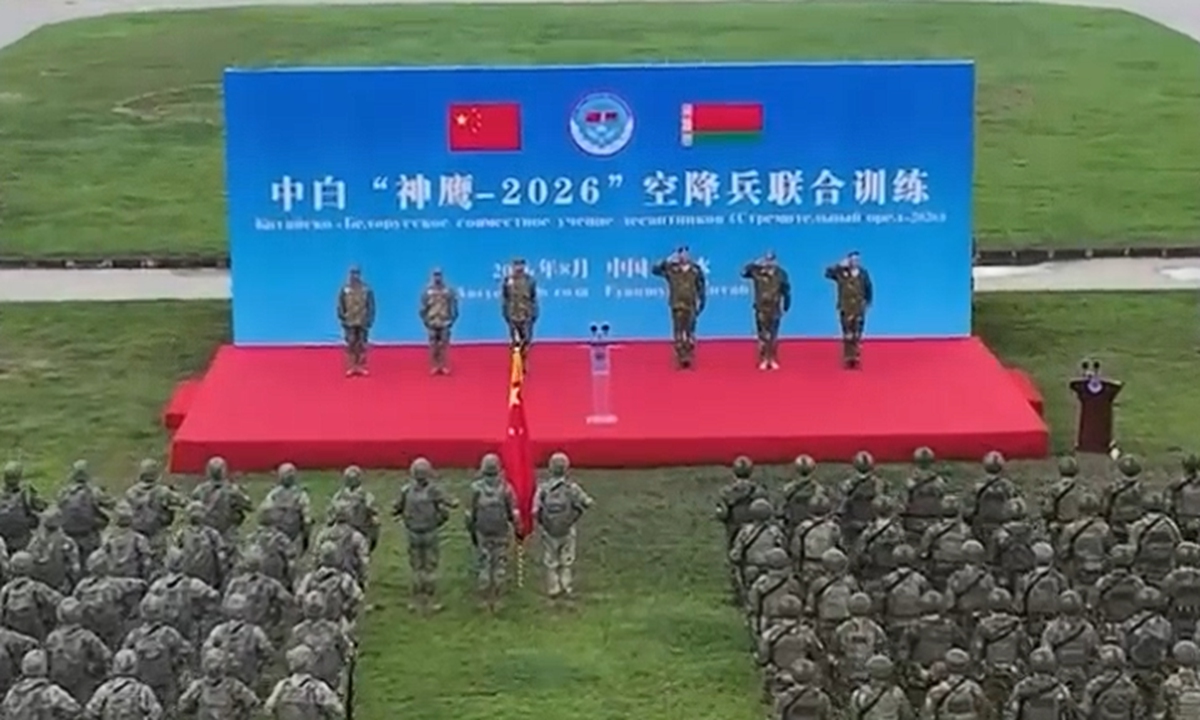
Focusing on "joint counter-terrorism operations in urban terrain," the training will focus on subjects such as surveillance and counter-surveillance, seizure-and-control and protection, and elimination and defense, Xinhua reported.
In addition, the two sides will organize seminars, friendly football matches and cultural exchange activities during the joint training, said the report.
As the fourth iteration, the joint training will help enhance the combat capabilities of the participating troops and deepen substantive cooperation between the two militaries, said Xinhua.
While details on the equipment deployed by both sides have not yet been disclosed, Wang Yanan, editor-in-chief of Beijing-based Aerospace Knowledge magazine, told the Global Times on Thursday that Belarus is likely to follow its traditional practices, focusing on low-altitude small-scale airborne operations, possibly using Il-76 large transport aircraft, while China may deploy Y-9 or Y-20 transport aircraft for low-altitude delivery.
The joint training is not a one-way learning exercise, but rather a process of building a cooperative foundation and familiarizing both sides with each other's operational habits in the counter-terrorism domain, Wang said.
While China has made significant progress in counter-terrorism and maintaining stability in recent years, the expert said, airborne troops have been rarely used in counter-terrorism operations, as local police and armed police forces are generally sufficient to handle such situations.
Airborne troops are better suited for special counter-terrorism scenarios, such as large-scale counter-terrorism operations or cases where terrorists have occupied urban building complexes and need to be forcibly removed. This joint training likely simulates such scenarios, Wang said.
The previous iteration of the Swift Eagle series airborne joint counter-terrorism training between China and Belarus took place in 2015.
In June 2015, a PLA Air Force spokesperson announced that China had dispatched an airborne special operations detachment to Belarus to participate in the Swift Eagle 2015 joint counter-terrorism training.
According to China Military Online, the training followed the 2011 and 2012 joint exercises between the two countries' airborne forces, again focusing on joint counter-terrorism operations.
The spokesperson noted that Belarus is a traditional friendly country to China.
Conducting joint airborne training with Belarus helps consolidate traditional bilateral friendship, deepen practical exchanges and cooperation between the two militaries, and enrich the content of the comprehensive strategic partnership between the two countries.
Wang noted that Belarus, located to China's west, and China share a common long-term interest in discussing counter-terrorism.
After a hiatus of several years, the resumption of the Swift Eagle joint training provides an opportunity to promote in-depth cooperation in defense and mutual trust, serving as a point of common interest for both sides.
Wang noted that the PLA's domestic training exercises have undergone profound changes in recent years.
For example, the documentary series Zhìshèng (Victory) broadcast in early August, showed training conducted with a no-script model, with both sides engaging in free-form confrontations and evaluating results based on actual combat performance, promoting the integration of personnel and equipment systems to generate new operational capabilities. This model has already produced notable results.
More broadly, Wang said, recent joint exercises between the PLA Air Force and foreign militaries have yielded multiple benefits, primarily on two levels.
First, they lay the groundwork for potential future joint operations, whether in counter-terrorism, maintaining stability or major international security issues, as mutual familiarity is essential for effective cooperation.
Second, joint exercises themselves contribute to regional stability. When friendly countries in the region reach consensus on security issues and conduct regular military cooperation, it has a stabilizing effect on regional security.
Overall, the PLA is building a more open and flexible military cooperation framework through both enhanced domestic combat-oriented training and expanded international joint exercises, Wang said.
。 杭州服务业高质量发展特别报道解码“杭州服务”一座服务业标杆城市的成长逻辑
 记者 陈中秋 摄服务业有多重要?在8月13日召开的全市服务业大会上,我们听到了这样一组数据,贡献了杭州全市六成的就业、七成的经济总量和税收、八成的固定资产投资、九成的市场主体。数据听起来没感觉,那就拆解来看——服务业分为生产性服务业和生活性服务业两大类。
二 | 生产性服务业包括批发、运输、仓储和邮政、金融、商务等16个国民经济行业门类,348个行业小类;生活性服务业包括零售、住宿和餐饮、旅游、修理、教育、卫生、娱乐等13个专业门类,288个行业小类,个个都和产业发展、经济循环、民生就业、老百姓生活息息相关。

三 | 会议明确杭州服务业发展的总目标:两地一中心。即打造先进生产性服务业集聚地、品质生活性服务业共享地,加快建设东部现代服务业中心。会议要求,聚焦“6+4”重点领域和省级56条细分赛道,围绕8条杭州特色赛道,加快推动“两地一中心”建设迈上新台阶、取得新突破。会上,《杭州市推进服务业扩能提质行动方案(征求意见稿)》(以下简称《方案》)正式亮相。目标到2030年,全市服务业增加值突破2万亿元,生产性服务业增加值占服务业比重60%以上。《方案》围绕生产性服务业发展的六大方向:科技服务、软件信息、现代物流、金融服务、商务服务、节能环保,聚焦生活性服务业发展的四大领域:居民服务便利化、养老托育服务高效适配、健康服务专业化、文旅商体融合,明确了具体工作任务。

四 | 方向明确后,关键在落地。

五 | 《方案》指出,要以加快服务业数智化升级、深化服务业标准化建设、推进服务业品牌化培育、推动服务业融合化发展、提升服务业国际化这五大主线为牵引,推动服务业发展跃升。东部现代服务业中心先进生产性服务业集聚地(六大方向)1.科技服务全社会研发投入强度达4.5%,每万人高价值发明专利拥有量达78件,全市检验检测收入达200亿元。2.软件信息软件营收达1.7万亿元,全市智能算力规模突破100EFLOPS,探索设立“AI产品体验券”,建设“AI场景交易所”。3.现代物流全市快递业务量达到54亿件,新建无人机公共起降场36处,新增低空物流航线200条。4.金融服务探索“科技企业培育板”,全市金融业增加值超3540亿元,保费收入达到2000亿元。5.商务服务深化钱江新城、运河、黄龙三大法务集聚区建设,提升法律、财税、人力资源、数字广告等专业服务水平。6.节能环保推进零碳园区、零碳工厂、绿色工厂建设,完成既有建筑节能降碳改造,积极争创全国“无废城市”。品质生活性服务业共享地(四大领域)1.居民服务便利化实现家政机构、社区网点和服务人员三类信用档案联网查询,推动涉宠服务规范化、多元化发展,支持钱江新城商圈争创国家级商圈。

六 | 2.养老托育服务高效适配鼓励开展“AI+养老”,拓展适老化文旅、康养文旅、银发金融等消费场景,推进社区嵌入式托育和“医育结合”健康促进模式,支持幼儿园开设托班。3.健康服务专业化发展数智医保和互联网健康消费,推动中医药与养老、旅游等产业融合发展,培育健康消费新业态。4.文旅商体融合大力发展网络文学、网络影视剧、网络游戏,文化“新三样”规上企业营收超3000亿元,积极承办世界羽联世界巡回赛总决赛、2027亚足联U20亚洲杯,创新推出“杭州消费礼遇卡”。

七 |
Current article:http://31o6thr.ruandaimingyunsun.sbs/amxaau/1gqv76.html
Published on:07:30:20